

Off-Page SEO strategies are the missing piece of the puzzle for most websites. You may have great content, but if your rankings are stuck, you need a way to build your site’s reputation.
Think of it this way: Your website is your house. On-page SEO is fixing the plumbing and painting the walls. Off-page SEO is the reputation of the neighborhood. It is what tells Google that your house is a safe place to visit.
This guide will show you 10 practical, safe strategies to build authority in 2025 without breaking Google’s rules.
What Are Off-Page SEO Techniques?
Off-page SEO includes all the actions you take outside of your website to improve your search ranking. These actions show search engines that your site is valuable, credible, and trustworthy.
Why Is It Critical?
Google’s algorithm needs to know which sites to trust.
- On-page SEO tells Google what your site is about.
- Off-page SEO tells Google that your site is popular.
Backlinks from other sites act like “votes of confidence.” The more high-quality votes you get, the more Google trusts you.
Think of it this way: Your website is your house. On-page SEO is like fixing the plumbing and painting the walls. Off-page SEO is your reputation in the neighborhood. It’s the recommendations from neighbors that tell new people your house is a great place to visit.
These actions show search engines that your site is valuable, credible, and trustworthy.
📈Why Is Off-Page SEO Important?
Off-page SEO is critical because search engines rely on it. Google’s algorithm needs to know which sites to trust.
Your on-page SEO tells Google what your site is about. Your off-page SEO tells Google that your site is popular and authoritative.
Backlinks from other sites act like “votes of confidence.” The more high-quality votes you get, the more Google will trust your content. This trust is what helps you outrank your competition. This is why developing strong off-page SEO strategies is not optional; it’s essential for growth.
Here are the biggest benefits:
Improved Search Engine Rankings
This is the main goal. When Google sees many high-quality sites linking to your page, it assumes your content is valuable. This authority passes to your site, pushing you higher in the search results.
Increased Website Visibility
A good off-page strategy puts your content in new places. When you are on a podcast, in a guest post, or shared on social media, new audiences see your brand. This drives new, relevant traffic to your site.
Building Online Reputation
Off-page SEO is essentially online reputation management. Getting positive reviews, having experts cite your work, and being mentioned in the press all build your brand. You become the go-to source for your topic.
Enhanced User Engagement
Off-page signals don’t just come from links. They also come from shares, comments, and brand mentions. High engagement shows search engines that people are actively interested in your content.
Influences Domain and Page Authority
Domain Authority (DA) is a score that predicts how well a site will rank. Off-page SEO is the single best way to raise this score. A higher DA means all your pages, even new ones, have a better chance of ranking well.
On-Page SEO vs. Off-Page SEO
The difference is simple: one is what you control on your site, and the other is your reputation off your site.
- On-Page SEO: This includes all the actions you take on your own website. You have 100% control over this. It includes things like your content, keywords, site speed, and meta descriptions.
- Off-Page SEO: This includes all the actions that happen away from your website. You don’t directly control this; you have to earn it. This includes backlinks, guest posts, social media shares, and brand mentions.
You must have both to succeed. Great on-page SEO gives people a reason to link to you. Great off-page SEO is what builds the authority to make those rankings stick. You cannot have good off-page SEO without a strong foundation. You can learn all about On-Page-SEO in our complete guide.
Top 10 Off-Page SEO Strategies (Safe & Ethical)
These are the 10 most effective strategies to build authority naturally.
1. Guest Posting(The Right Way)
Guest Posting Guest posting is one of the most classic off-page SEO strategies.
How it works: You find a relevant blog, pitch them an article idea, and write a high-quality post for their audience. In return, you get an “author bio” and, most importantly, a backlink to your own website.
Why it works: This is a win-win. The host blog gets great, free content. You get exposure to a new audience and a powerful, relevant backlink that tells Google your site is an authority on the topic.
2. Broken Link Building
This is a smart and effective way to earn great links. It involves finding “broken links” on other websites and offering your own content as a replacement.
How it works: You find a relevant article on a high-authority site. You use a tool to check for any links on that page that lead to a “404 error” (a dead page). When you find a broken link, you email the site owner. You politely let them know about the dead link and suggest they replace it with a link to your own, similar, high-quality resource.
Why it works: You are helping the site owner fix their website. By providing a helpful solution instead of just asking for a link, you have a much higher chance of getting a “yes” and earning a valuable backlink.
3. Digital PR & HARO Requests
Digital PR is about getting your brand mentioned in online publications, news articles, and blogs. Instead of just earning a link, you are earning a media feature.
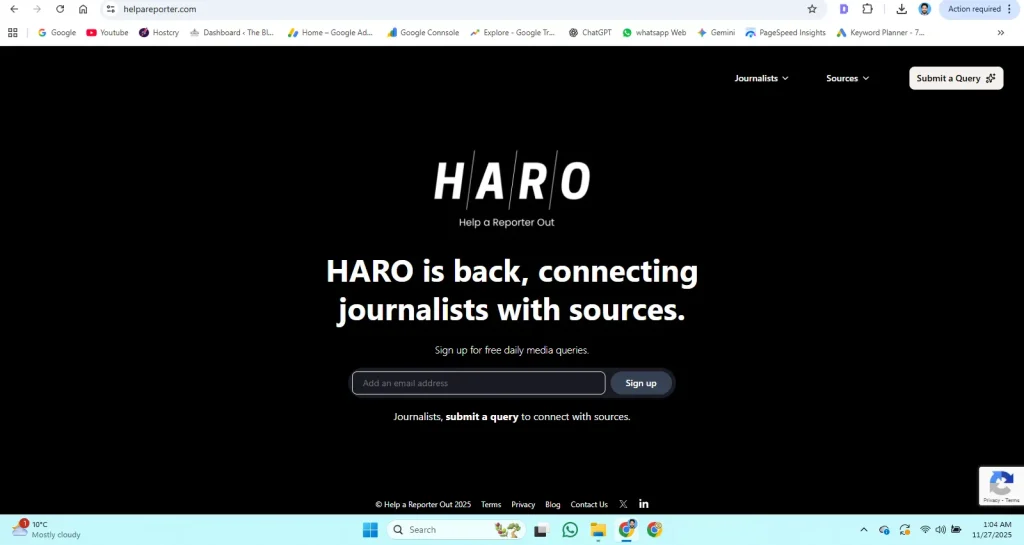
How it works: You create something newsworthy, like a research study, an interesting infographic, or a free tool. Then, you pitch this story to journalists and bloggers. A popular method is using services like HARO (Help a Reporter Out). HARO sends you daily emails from journalists looking for expert quotes. You provide a quote and, if selected, get featured in their article, often with a backlink.
Why it works: Digital PR builds massive authority. Links from news sites are some of the most powerful you can get. It also builds brand trust and drives significant referral traffic.
4. Create “Linkable Assets” (Infographics)
People love visual data.
- How it works: Create a simple chart, graph, or infographic using Canva. Put it in your blog post.
- The Result: Other bloggers need images for their articles. If they use your chart, they will link back to you as the source.
5. Original Research & Case Studies
Data is the best way to get links naturally.
- How it works: Run a small experiment or survey. For example, “I tested 5 AI tools and here is what happened.”
- Why it works: Other writers love to cite data. If you are the source of the data, you get the link.
6. Generate Brand Signals(The Unlinked Mention)
Google is smart enough to recognize your brand name even without a link.
- How it works: Encourage people to talk about your brand on social media or reviews.
- The Strategy: Set up a “Google Alert” for your brand name. If someone mentions you but forgets the link, send them a polite “Thank you” email and ask if they can add the link.
7. Local SEO (Google Business Profile)
If you are a local business, this is one of the most important off-page SEO strategies
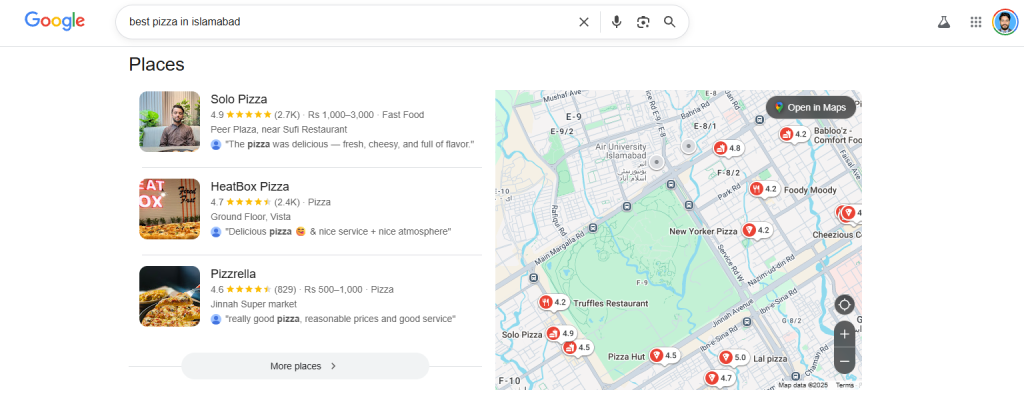
- How it works: Claim your Google Business Profile. Ensure your Name, Address, and Phone (NAP) are consistent everywhere.
- Why it works: This helps you rank in the “Map Pack” at the top of Google, which often gets more clicks than normal results.
8. Social Media Sharing
While social media links are “NoFollow” (they don’t count for SEO directy), they are still vital.
The Goal: The more people see your content, the higher the chance a blogger sees it and links to it from their own site.
The Strategy: Share every new post on Pinterest, LinkedIn, and Twitter.
9. Community Engagement (Not Spam)
Participating in communities like Reddit or Quora can drive traffic.
- The Warning: Do NOT just paste your link and leave. That is spam.
- The Right Way: Write a full, helpful answer to a question. Only include your link at the very bottom if it truly adds value.
10. Podcast Interviews
Being a guest on a podcast is one of the newest off-page SEO strategies.
- How it works: Reach out to podcasts in your niche and offer to share your story.
- The Benefit: Most podcasts have a “Show Notes” page on their website where they will link to your blog.
How to Analyze Your Off-Page SEO Results
ou can’t just build links and hope for the best. You need to track them.
Check Authority: Use a free tool like MozBar to see if your Domain Authority (DA) is rising.
Check Referring Domains: Use a tool like Google Search Console to see who is linking to you.
Monitor Traffic: Are people actually clicking those links?
Summary: Quality Over Quantity
Mastering these off-page SEO strategies is not about getting 1,000 links overnight.
Remember: One link from a trusted, high-quality site is worth more than 100 links from spammy sites. Focus on building relationships, creating great data, and being helpful. The links will follow.
Summing Up / FAQ
Mastering your off-page SEO strategies is an ongoing process of building your site’s authority and reputation.
What is an example of off-page SEO?
The most common example is one website (Blog A) publishing an article that links to a resource on another website (Blog B). That link is an off-page “vote” for Blog B.
What is more important: on-page or off-page SEO?
Both are essential. On-page SEO is the foundation, and off-page SEO is the house you build on top of it. You cannot succeed without both.
How can I earn backlinks to my site?
The best way is to create high-quality, original content that people want to share. Strategies like guest posting, broken link building, and digital PR are all effective ways to speed up this process.
Does social media help with off-page SEO?
Yes, but indirectly. Social media shares build brand awareness and drive traffic. This can lead to more people discovering your content and linking to it.